
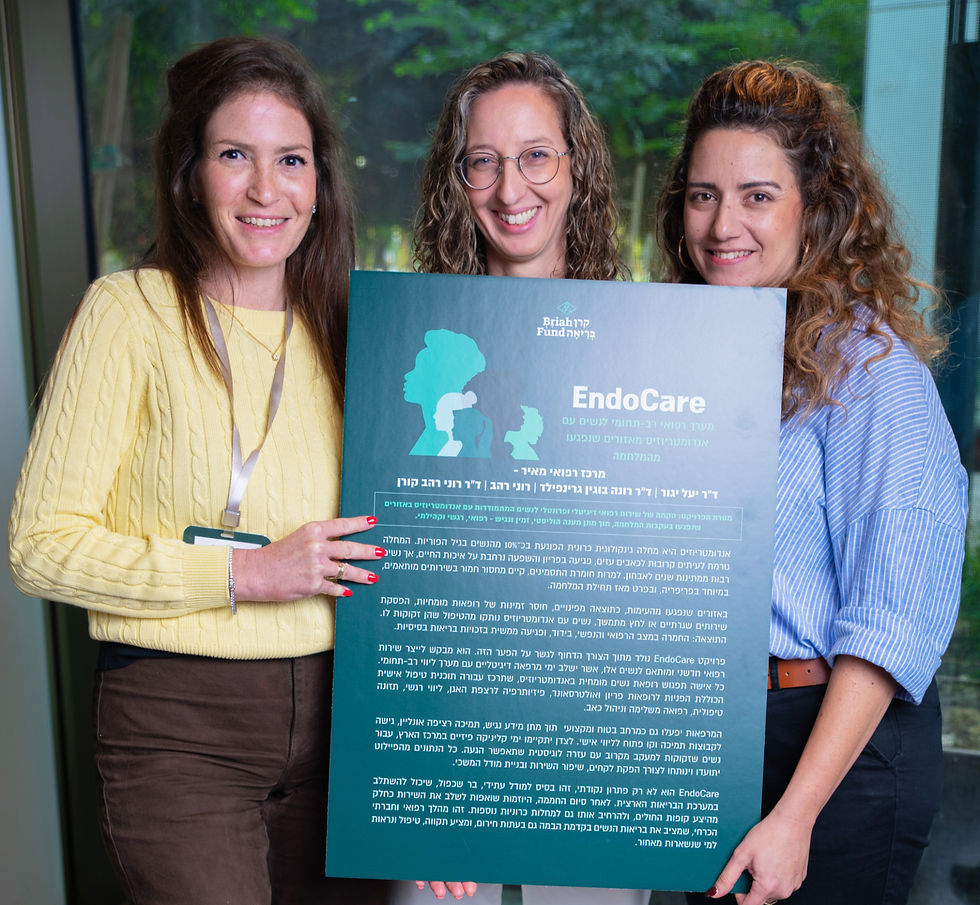
EndoCare - Endometriosis Health Service
Updated: Feb 2
Yael Yagur | Rona Bogin | Roni Rahav
Meir Medical Center
Project goal:
Establishing a digital and in-person medical service for women dealing with endometriosis in areas affected by the war, based on a holistic, empathic and accessible approach that offers medical, emotional and community-based care.
Project description:
Endometriosis is a chronic gynecological disease that affects approximately 10% of women of reproductive age. The disease often causes severe pain, impaired fertility, and a widespread impact on quality of life, yet many women wait years for a diagnosis. Despite the severity of symptoms, there is a lack of services, especially in the periphery, and especially since the start of the war.
Women with endometriosis have been cut off from the care they need in areas affected by the war as a result of evacuations, interruption of routine services or ongoing stress. The result is a deterioration of their medical and mental condition, isolation, and a real violation of basic health rights.
The EndoCare project was born out of the urgent need to bridge this gap. It seeks to create an innovative and tailored medical service for these women, which will combine digital clinic days with a multidisciplinary support system. Each woman will meet with a gynecologist specializing in endometriosis, who will put together a personalized treatment plan for her that includes referrals to fertility doctors and ultrasounds, pelvic floor physiotherapy, emotional support, therapeutic nutrition, complementary medicine, and pain management, as necessary.
The clinics will also operate as a safe and professional space while providing accessible information, continuous online support, access to support groups and an open line for personal guidance. Alongside them, in-person clinic days will be held, for women who need close monitoring with logistical assistance to enable arrival. All data from the pilot program will be documented and analyzed for the purpose of improving the service and building a lasting model that can be integrated into the national healthcare system.
After the incubator is completed, the initiative aims to integrate the service as part of HMOs services and expand it to other chronic diseases. This is a necessary medical and social move that puts women's health at the forefront even in times of emergency, and offers hope, care and visibility to those left behind.


Comments